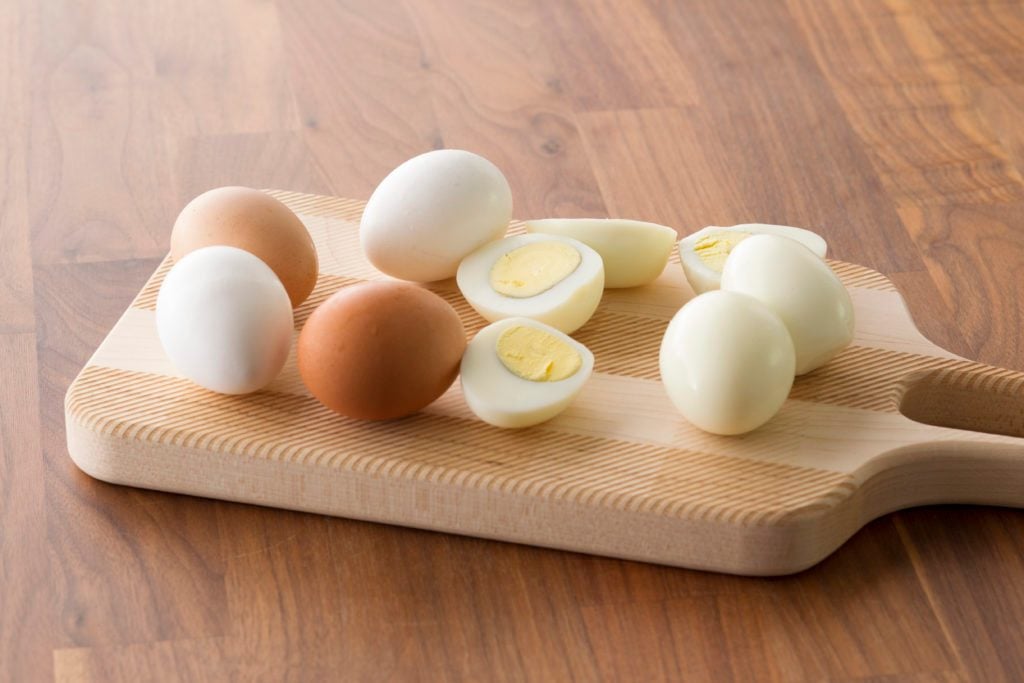
The humble hard-boiled egg: a versatile staple, perfect for quick snacks, vibrant salads, or creamy deviled eggs. Yet, for all its simplicity, the act of peeling a hard-boiled egg can often feel like a frustrating battle, leaving you with cratered whites, tiny shell shards, and sticky fingers. If you've ever found yourself asking, "Why are my hard-boiled eggs so hard to peel?" you're not alone. The good news is, achieving that perfectly smooth, effortless peel isn't just a matter of luck. There's a science to it, and with a few tried-and-true techniques, mastering how to peel hard boiled eggs will become a simple, satisfying task.
No more struggling to salvage an egg that looks like it lost a fight with its shell. We're diving deep into the reasons behind stubborn peels and equipping you with foolproof methods that will transform your egg-peeling experience from a chore into a seamless culinary skill.
The Science Behind the Sticky Shell: Why Fresh Eggs Resist Peeling
Many home cooks swear by various peeling hacks, but often overlook one fundamental factor: the age of the egg itself. The truth is, farm-fresh eggs, while excellent for scrambling or frying, are often the culprits behind difficult peeling. This isn't a flaw in the egg; it's simply how nature works. Here’s why:
- pH Levels and Adhesion: When an egg is very fresh, its egg white has a relatively low pH level, making it slightly acidic. This acidity causes the egg white to bond more strongly with the inner membrane of the shell. As an egg ages, its pH level naturally increases, becoming more alkaline. This change in pH weakens the bond between the egg white and the membrane, making it significantly easier to separate after cooking.
- The Expanding Air Pocket: Every egg has a small air pocket, typically located at the larger end. In fresh eggs, this air pocket is minimal. As an egg ages, moisture slowly evaporates through the porous shell, causing this air pocket to expand. A larger air pocket creates more space between the egg white and the shell, providing a natural starting point for peeling and reducing the chances of the egg white tearing.
So, what's the takeaway? While there's no harm in boiling fresh eggs, understand that they will likely present a greater challenge to peel. For optimal peeling ease, aim to use eggs that are at least a few days old, ideally a week. A quick tip for checking egg age without a date stamp: gently place an egg in a bowl of water. If it lies flat on its side, it's very fresh. If it stands on one end but still touches the bottom, it's a few weeks old – perfect for boiling! If it floats, it's past its prime and should be discarded.
Mastering the Peel: Tried-and-True Methods for Flawless Results
Once you've selected your perfectly-aged eggs, the cooking and peeling methods become paramount. Culinary experts and home cooks alike have refined a series of techniques that practically guarantee a smooth peel. Try these methods to find your favorite:
The Acid Advantage: A Splash of Vinegar
One surprisingly effective trick involves adding a common pantry staple to your boiling water: vinegar. A small splash of distilled white vinegar or apple cider vinegar (around a teaspoon per quart of water) won't alter the flavor of your eggs, but it works wonders on the shell. Vinegar is acetic acid, and it helps to break down the calcium carbonate, the primary mineral that gives eggshells their rigidity. A slightly weakened shell becomes more flexible, making it easier to crack and peel away without clinging to the delicate egg white. Some cooks also report success with a pinch of baking soda for similar reasons, as it can make the cooking water slightly more alkaline, further helping with the membrane separation.
The Immediate Ice Bath: Shocking Your Way to Success
This is perhaps one of the most widely recommended and effective methods. As soon as your eggs are done cooking (whether you prefer a jammy yolk or a fully firm one), immediately transfer them from the hot water into a bowl filled with ice water. This rapid temperature change serves a dual purpose:
- It instantly halts the cooking process, ensuring your yolks don't overcook and turn grey.
- More importantly for peeling, the sudden cold causes the egg white to contract and pull away from the shell, while simultaneously making the shell itself more brittle. This combination creates a small gap between the egg and its shell, allowing for a much cleaner separation.
Leave the eggs in the ice bath for at least 5-10 minutes, or until they are completely cool to the touch. This cool-down period is crucial for the shell to become truly brittle and for the egg white to fully retract.
The Countertop Roll: Cracking with Control
Once your eggs are cooled, resist the urge to immediately pick at them. Instead, gently roll each egg on a hard, flat surface like a countertop. Apply gentle, even pressure with the palm of your hand, rocking it back and forth. The goal is to create a web of tiny cracks all over the shell, not to smash the egg. This method ensures that you have multiple points of entry and allows air to get between the shell and the membrane, making the next step much simpler. For even more detailed instructions and visual guides on achieving this, check out our article: Peel Hard-Boiled Eggs Easily: Foolproof Methods Revealed.
Starting at the Air Pocket: The Strategic Peel
After rolling, locate the larger end of the egg – this is where the air pocket is. Starting your peel here gives you a natural advantage. Gently pry open a piece of the shell at this point. You'll often find a bit more space, and you can more easily slip your finger or a small spoon under the inner membrane. The key is to try and peel the shell away while keeping that thin, white membrane attached to the shell. When you manage to get under the membrane, the shell often comes off in much larger pieces, sometimes even in one or two satisfying spirals.
The Shake Method: Hands-Free Peeling Power
For those who prefer a less hands-on approach, or are peeling a batch of eggs, the shake method can be surprisingly effective. Place one or two cooled, hard-boiled eggs into a jar (a jam jar or a pint-sized Mason jar works perfectly). Add a small amount of water, just enough to barely cover the bottom. Secure the lid tightly and shake vigorously, like you're mixing a cocktail, for about 10-20 seconds. The eggs will jostle against each other and the sides of the jar, creating a multitude of cracks. Once the shell is thoroughly cracked, you can simply pour out the eggs, and often, much of the shell will have already separated, leaving you with very little left to pick off. This is a fantastic method for minimizing direct contact and mess!
Beyond the Peel: Essential Post-Peeling Care
Even after successfully removing the majority of the shell, one common annoyance remains: tiny, gritty shards of shell that cling to the egg white. A perfectly peeled egg deserves a clean finish.
Rinsing Away Residual Shards
The final, crucial step for a pristine hard-boiled egg is a quick rinse. After peeling, hold your egg under a gentle stream of cool running water. As you rinse, gently rub your fingers over the surface of the egg to dislodge any lingering, almost invisible shell fragments. This ensures a perfectly smooth texture and prevents any unwelcome crunch from ruining your enjoyment. It's a small step that makes a huge difference, especially if you're preparing eggs for deviled eggs or egg salad where presentation and texture are key.
Storing Your Peeled Eggs
Once peeled and rinsed, your hard-boiled eggs are ready for use. If you're not consuming them immediately, proper storage is important to maintain freshness and prevent drying. Place peeled hard-boiled eggs in an airtight container in the refrigerator. For an extra layer of protection against drying out, you can cover them with a damp paper towel or even submerge them in a bowl of clean water (changing the water daily). Peeled hard-boiled eggs typically last up to 5-7 days when stored correctly in the refrigerator. To truly elevate your egg-peeling game and explore more expert advice, make sure to read Unlock Flawless Peeling: Pro Tips for Hard-Boiled Eggs.
No longer must the prospect of peeling hard-boiled eggs fill you with dread. By understanding the science behind why shells stick, implementing the simple techniques of using older eggs, incorporating an ice bath, or even trying the shake method, you can consistently achieve beautifully peeled eggs. Experiment with these different approaches to discover which method works best for you. With a little practice, you'll be peeling eggs like a pro, ready to enjoy this versatile ingredient in all its perfectly smooth glory.
